Restaurants & Bars search
What it is
Marriott.com’s restaurant search required a destination before you could do anything. Want to find a rooftop bar in Barcelona before booking your hotel? The product wasn’t built for that — it assumed you already knew where you were going.
I designed the natural language search experience for Restaurants & Bars as the Senior Product Designer on the Search & Maps team. The goal was a single open-text search bar that could understand intent — cuisine, mood, location — and return relevant results without forcing users into a filter flow. It shipped in November 2023.
The problem
Destination-first search is a dead end for users who don’t have a destination yet. It’s also a dead end for Marriott — a user who can’t browse doesn’t convert, and a platform that can’t surface restaurants by cuisine or vibe isn’t a place anyone goes to get inspired.
The opportunity was clear: if users could type anything — “vegetarian near me”, “rooftop bar in Tokyo”, “gluten-free brunch” — and get relevant results, Marriott could become part of the research phase, not just the booking phase.
Research
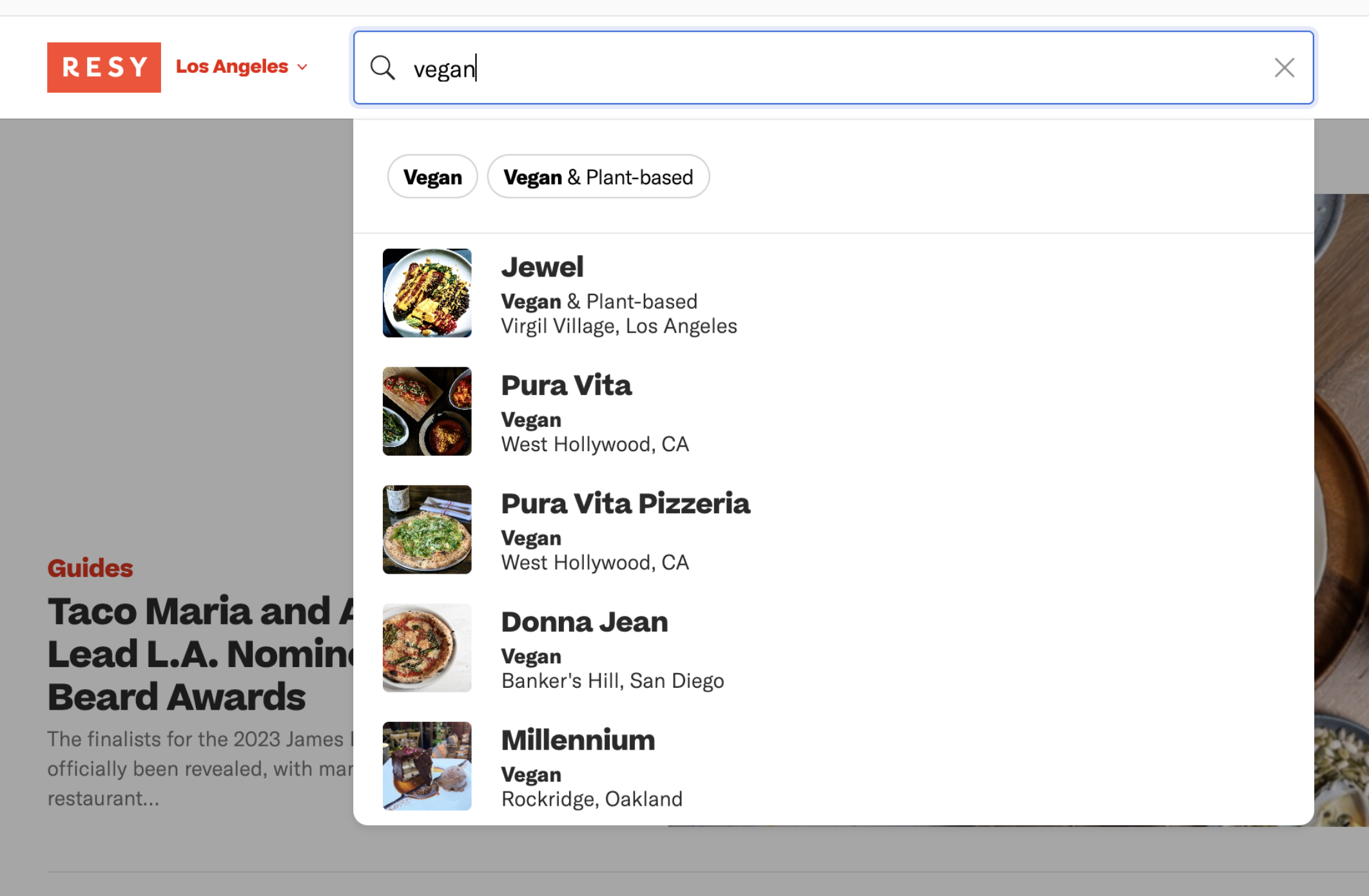
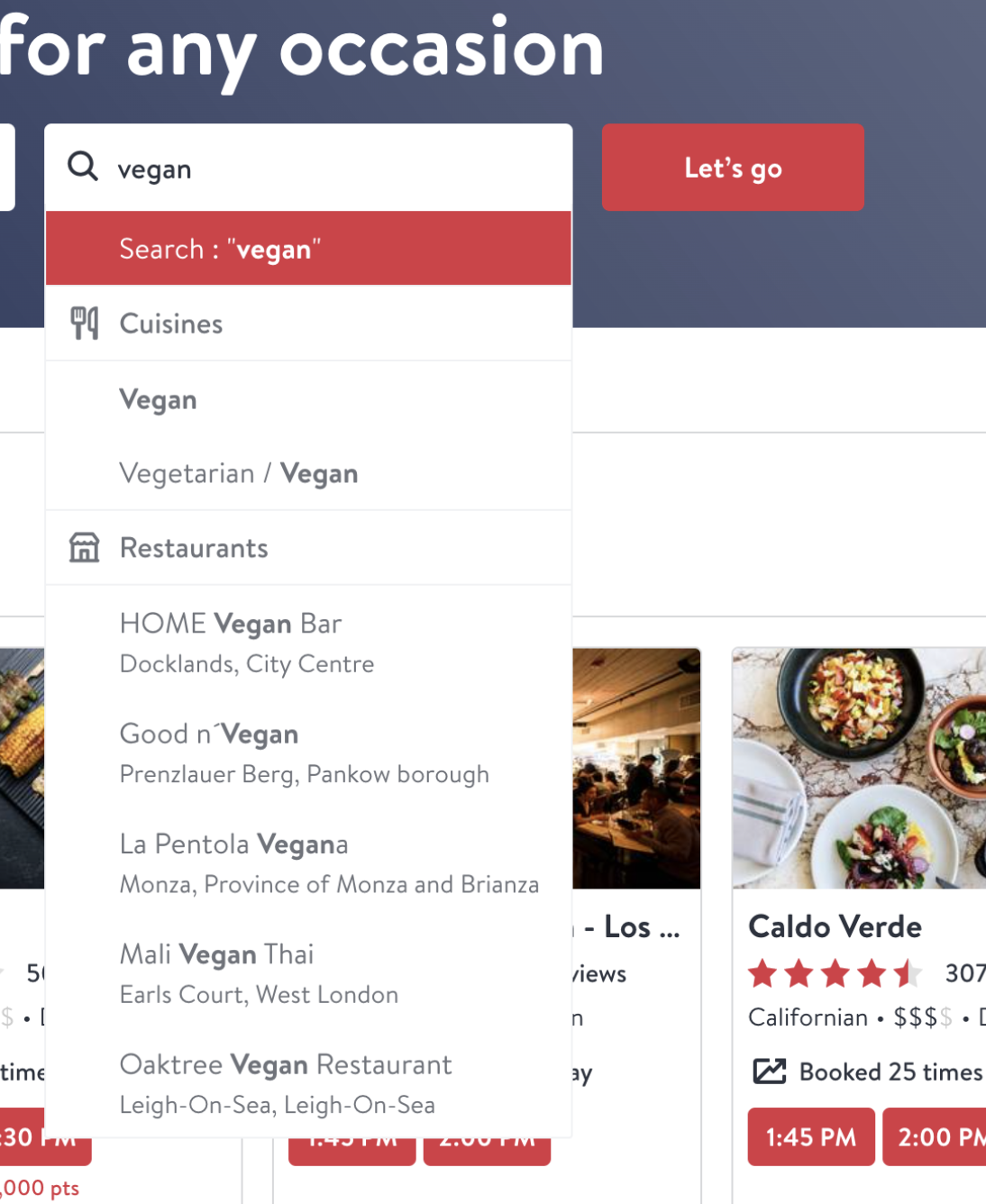
I looked at how competitors handled open-text dining search. Resy and OpenTable each had different approaches to NLP and contextual suggestions — the maturity varied, but the pattern was consistent: reduce friction at the top of the funnel.
Internally, our UX team had catalogued customer feedback through a workshop. The themes clustered around the same ideas: users wanted to explore, not just book. Natural language search was the lever.
Design
A single search bar with rotating hint text. One field, no required destination. I used rotating placeholder copy to prime users on what the search could understand — “Try ‘vegetarian in Los Angeles’” — without overwhelming them with instructions. I worked closely with the engineering team to map every design decision against what Lucidworks Fusion could actually support for the November release.
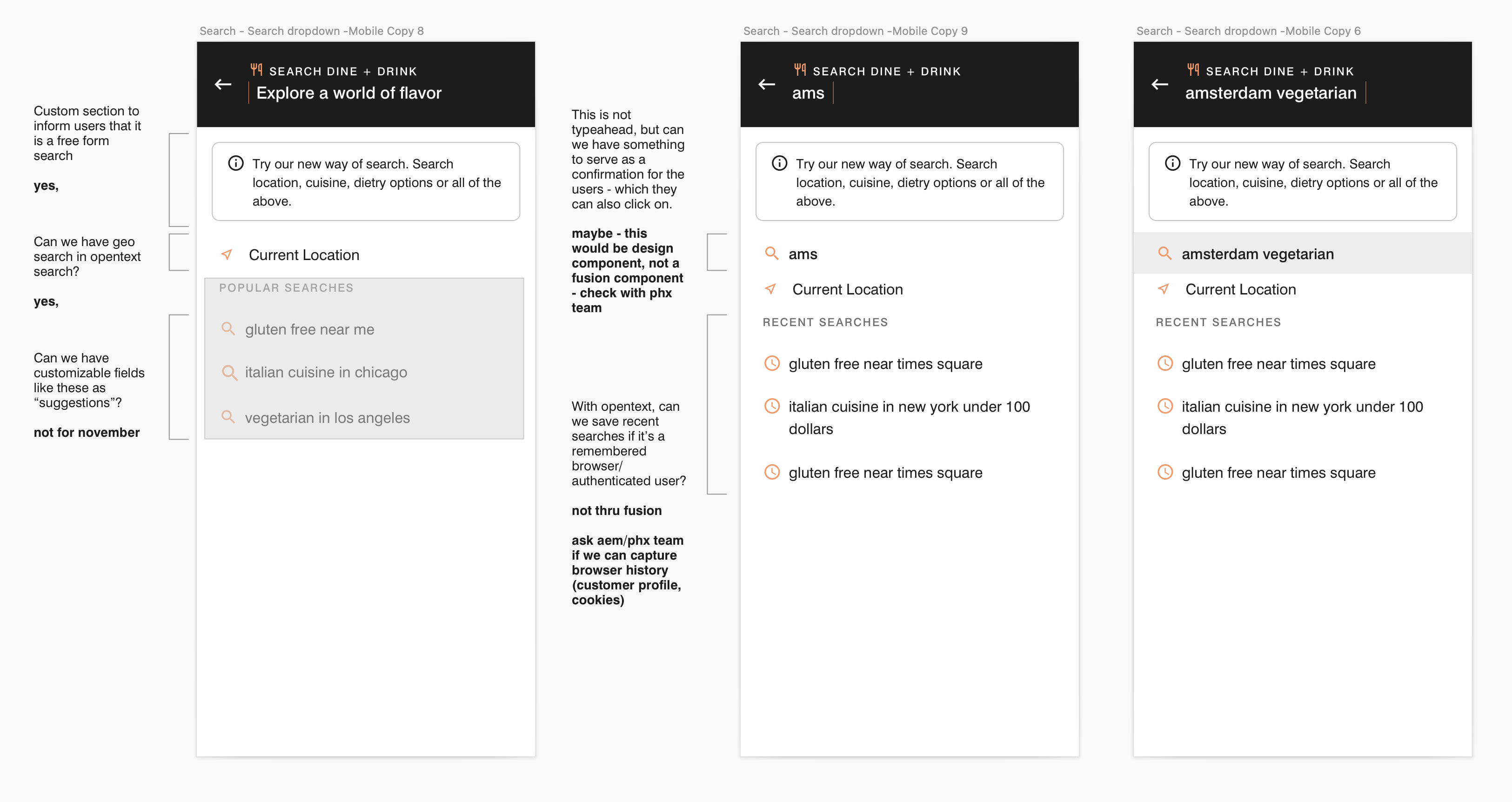
Filter chip ideation. Before committing to the open-text approach, I explored a filter chip pattern — quick-select tags for cuisine, ambiance, and dietary preference that could scaffold the query without requiring users to type. The exploration showed it was too constrained for the range of intents we needed to support, but it informed how we surfaced applied filters in the results view.
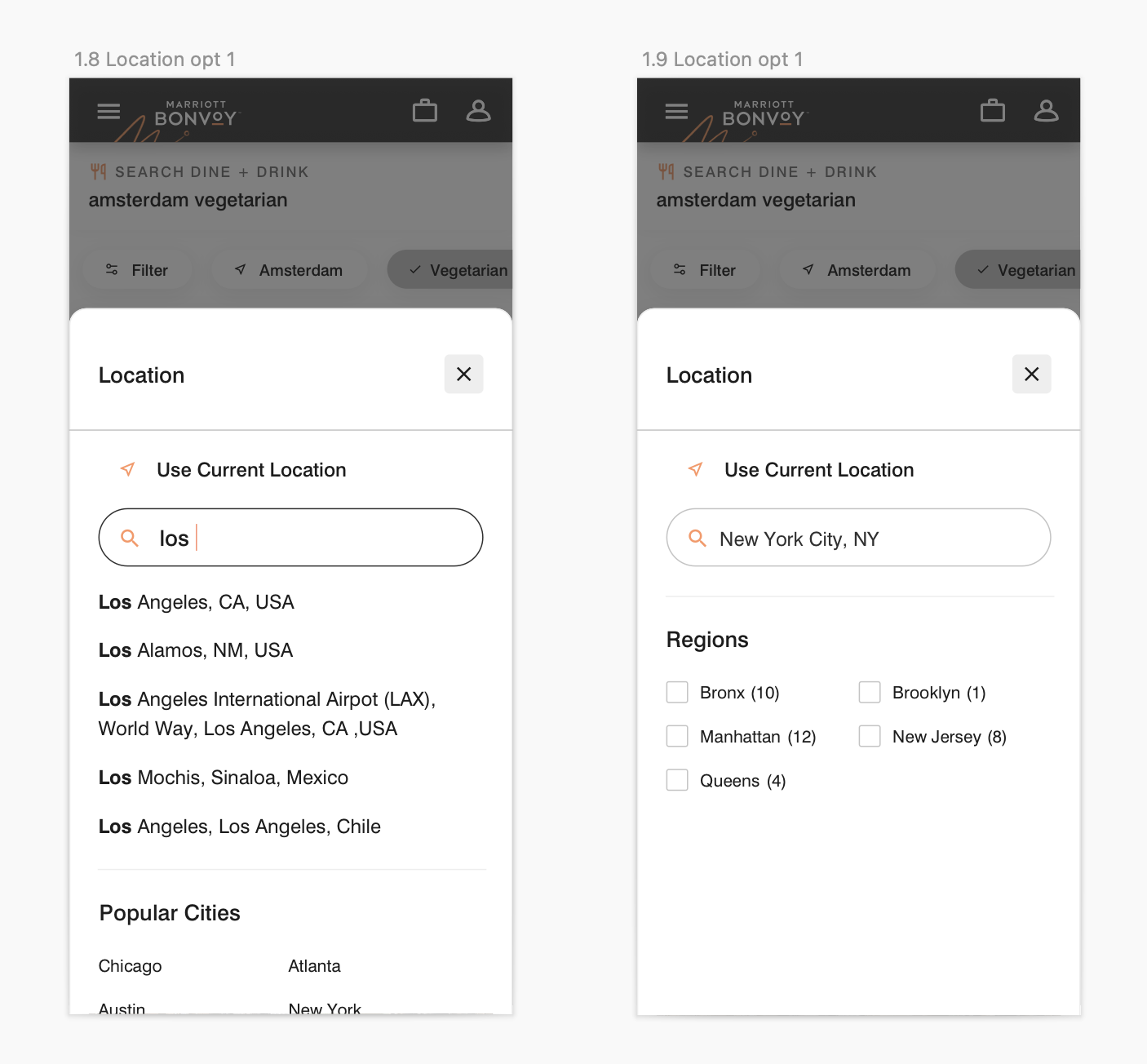
Addressing location ambiguity. A user searching “vegetarian restaurants” without a city creates a problem: what results do you show, and how do you communicate the scope? I explored options for surfacing location context inline — making it easy to add or adjust without creating a second barrier before results.
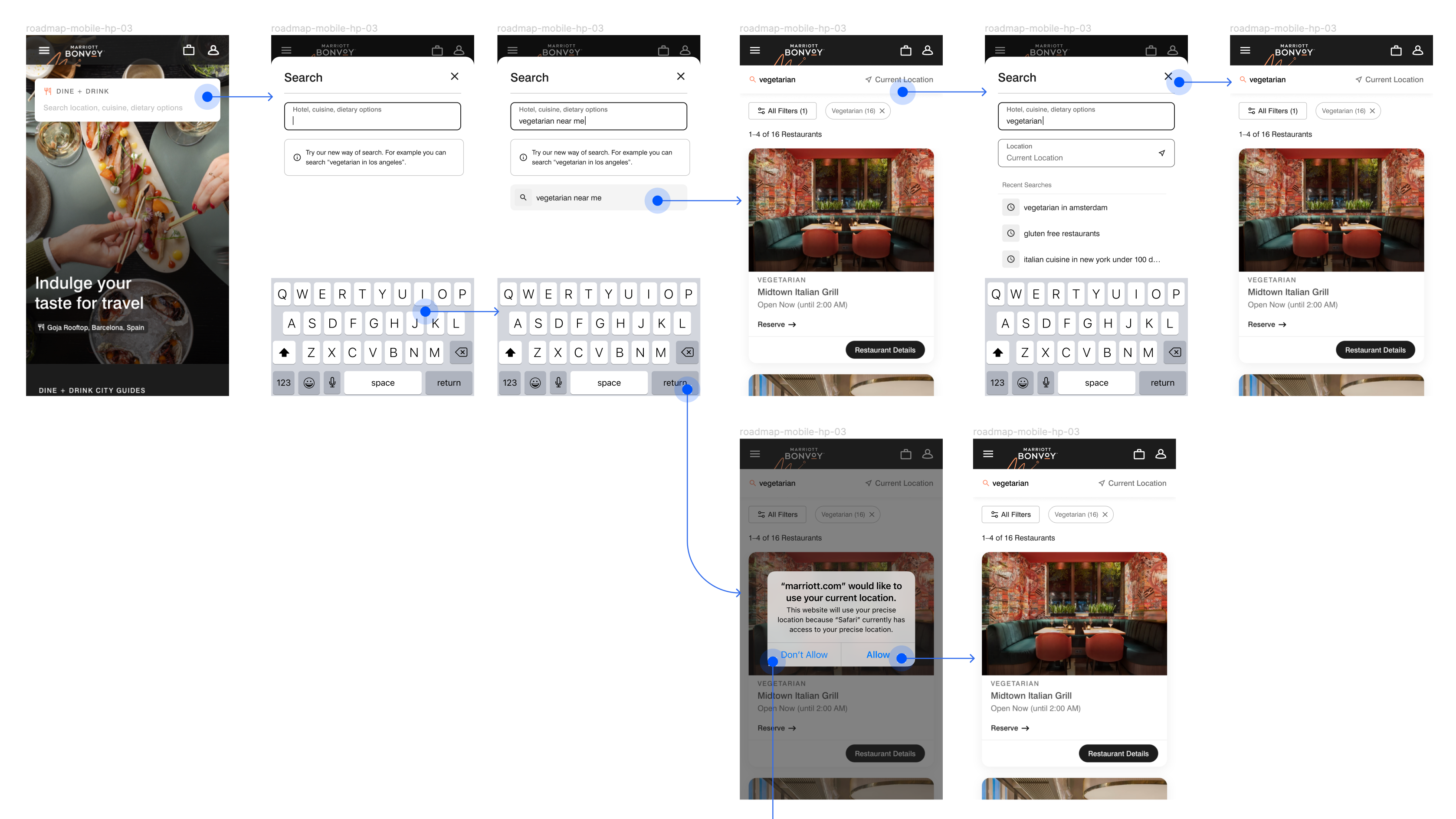
Mapping the full search flow. I mapped the end-to-end user journey — from the Dine + Drink home screen through typing, seeing results, handling the location permission prompt, and arriving at a filtered result set. The flow kept design and engineering aligned on exactly what was in scope for the November release.
UX writing & A/B testing
I worked with the research team to test three approaches to the search bar placeholder copy. The core question: could users recognize this as a free-form search, not a keyword box?
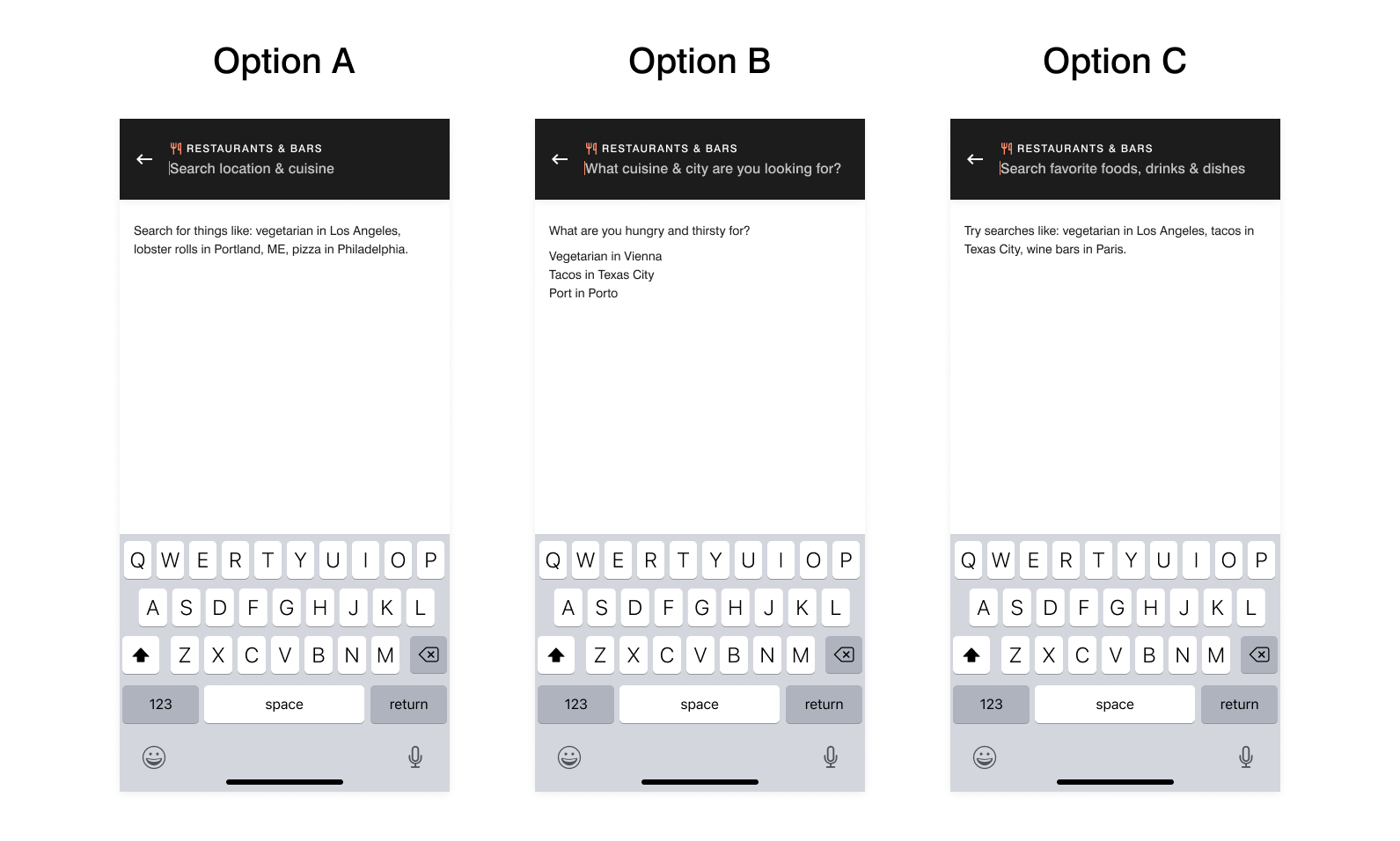
Option B — a conversational, example-led approach — got 42% of the vote and was rated the clearest and friendliest. It became the launch copy.
Results
The search launched in November 2023 across Marriott.com’s Restaurants & Bars platform. Users can now search by cuisine, dietary preference, and location in a single open-text field — without specifying a destination first. It’s the foundation for a broader NLP rollout across Marriott’s digital products.
Future iterations
The next phase is data-driven: trending searches based on real user queries, typeahead powered by the NLP model, and clearer differentiation between cuisine and restaurant results in the output.